

Iran Ceasefire Sparks Mortgage Rate Relief and Boosts Nottingham Housing Market Confidence
The recent ceasefire involving Iran, the United States, and Israel has introduced a wave of cautious optimism into global property markets. For estate agents in Nottingham, property investors, and buyers searching for Nottingham property for sale or houses for sale Nottingham, this shift matters more than it might initially appear. The housing market is deeply tied to global economic stability, and the easing of geopolitical tensions is already feeding into mortgage sentiment, housing indexes, and buyer confidence.
When the conflict escalated earlier in 2026, the housing market experienced a clear and measurable dip. Housing indexes such as the Royal Institution of Chartered Surveyors survey showed a sharp decline in buyer demand and house price expectations, with price balance dropping to its weakest level since early 2024. This downturn was not caused by property fundamentals in cities like Nottingham but by macroeconomic shock. The war disrupted global energy supply chains, pushing oil prices higher and fuelling inflation, which in turn drove mortgage rates upward. As mortgage lenders adjusted to higher swap rates and inflation expectations, borrowing costs rose rapidly, directly impacting affordability for first-time buyers and home movers in the UK property market.
Mortgage lender data and financial market reactions underline the scale of this impact. Average mortgage rates climbed significantly, with five-year fixed deals rising to around 4.7% and two-year rates exceeding 5.8%, levels not seen since 2024. Mortgage applications fell as borrowing became more expensive and uncertainty increased. For buyers searching for Nottingham homes, Nottingham estate agents reported hesitation, longer decision cycles, and reduced transaction volumes, mirroring national trends. The rise in energy costs and inflation expectations also meant central banks were less able to cut interest rates, reinforcing higher mortgage pricing.
Despite these negative pressures, some underlying housing indicators remained resilient. Inventory levels increased and house prices softened slightly, which in many areas created opportunities for buyers. Homes stayed on the market longer, giving buyers more negotiating power. For Nottingham estate agents, this translated into a more balanced market rather than a collapse.
One of the clearest ways to understand how the Iran ceasefire is helping the housing market is to look at mortgage rate trends and where they are expected to go next. During the peak of the conflict, mortgage rates surged rapidly as inflation fears and oil price shocks filtered through global financial markets. In the UK property market, including areas such as Nottingham, average two-year fixed mortgage rates climbed above 5.8%, directly reducing affordability for buyers searching for houses for sale Nottingham and slowing demand for Nottingham property for sale.
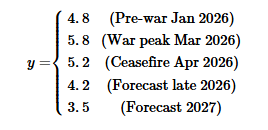
Market Behaviour Trend
The trend above reflects real market behaviour. At the start of 2026, mortgage rates were expected to fall steadily, with some of the best five-year fixed deals sitting near 3.75%. However, the escalation of conflict in the Middle East pushed energy prices sharply higher, triggering inflation concerns and forcing lenders to increase rates quickly. As a result, Nottingham estate agents saw reduced buyer enquiries, particularly from first-time buyers relying on competitive mortgage products.
Since the ceasefire, early signs of recovery are already visible. Mortgage rates have begun to stabilise and edge down again as bond yields fall and market confidence improves. This is critical for the Nottingham housing market because even small reductions in mortgage rates significantly improve affordability and borrowing capacity for buyers looking at Nottingham homes or buy to let Nottingham opportunities.
Looking ahead, forecasts remain cautiously optimistic. Many analysts expect mortgage rates to fall towards the low 4% range by late 2026, with some projections suggesting levels around 3.5% by 2027 if inflation continues to ease. For estate agents Nottingham wide, this creates a strong foundation for renewed growth. Lower borrowing costs typically lead to increased demand, stronger property valuations, and higher transaction volumes across the Nottingham property market.
In addition, the ceasefire has helped ease oil prices, which were a primary driver of inflation during the conflict. As inflation pressures begin to soften, central banks may regain flexibility to stabilise or even reduce interest rates. This creates a more favourable environment for buyers searching for houses for sale in Nottingham, as well as sellers looking to achieve strong valuations. Estate agents Nottingham wide are already seeing renewed enquiries as confidence returns.
There is also a longer-term structural benefit that often goes underreported. Historically, geopolitical instability in the Middle East has driven international capital into stable property markets such as the UK. While London has traditionally been a major beneficiary, regional cities like Nottingham are increasingly attracting attention due to affordability and strong rental yields. This trend benefits Nottingham estate agents, landlords, and developers alike, particularly in the buy to let Nottingham sector.
Another positive signal comes from the reaction of housing-related equities and developers. Following the ceasefire, homebuilder confidence improved as investors anticipated better affordability and stronger demand conditions. This reflects broader confidence that the housing market downturn was temporary and externally driven rather than structural. For Nottingham property experts, this reinforces the idea that the dip created opportunities rather than long-term damage.
In conclusion, while the conflict involving Iran, the United States, and Israel caused a short-term dip in the housing market through rising mortgage rates, inflation, and reduced buyer confidence, the ceasefire is already helping to stabilise and improve conditions. Falling yields, easing energy prices, and renewed investor confidence are all positive signals for the UK property market. For those searching estate agents Nottingham, Nottingham houses for sale, property valuation Nottingham, or property investment Nottingham, the current environment may represent a window of opportunity as the market transitions from uncertainty back toward growth.