

Living in Plumtree: A Local Area Guide
Plumtree is a small and highly attractive village south-east of Nottingham, positioned between Tollerton and Keyworth and close to the A606 Melton Road.
Its historic church, traditional Main Street, village pub, former railway station and established houses create a strong rural identity, while Keyworth, West Bridgford and Nottingham remain within practical reach.
About Plumtree
Plumtree is a small village and civil parish in Rushcliffe, situated around five miles south-east of Nottingham between Tollerton and Keyworth.
The settlement has changed relatively little in its overall form compared with many villages closer to Nottingham. Main Street, Church Hill, Station Road and surrounding lanes contain a mixture of older cottages, substantial houses and rural property.
Plumtree's position is particularly attractive to buyers who want a traditional village atmosphere but do not want to be too far from Keyworth, West Bridgford or Nottingham.
History and village character
Plumtree has very deep roots. A church is specifically recorded here in the Domesday Book of 1086, and archaeological evidence from St Mary's includes early medieval and Norman fabric.
St Mary the Virgin
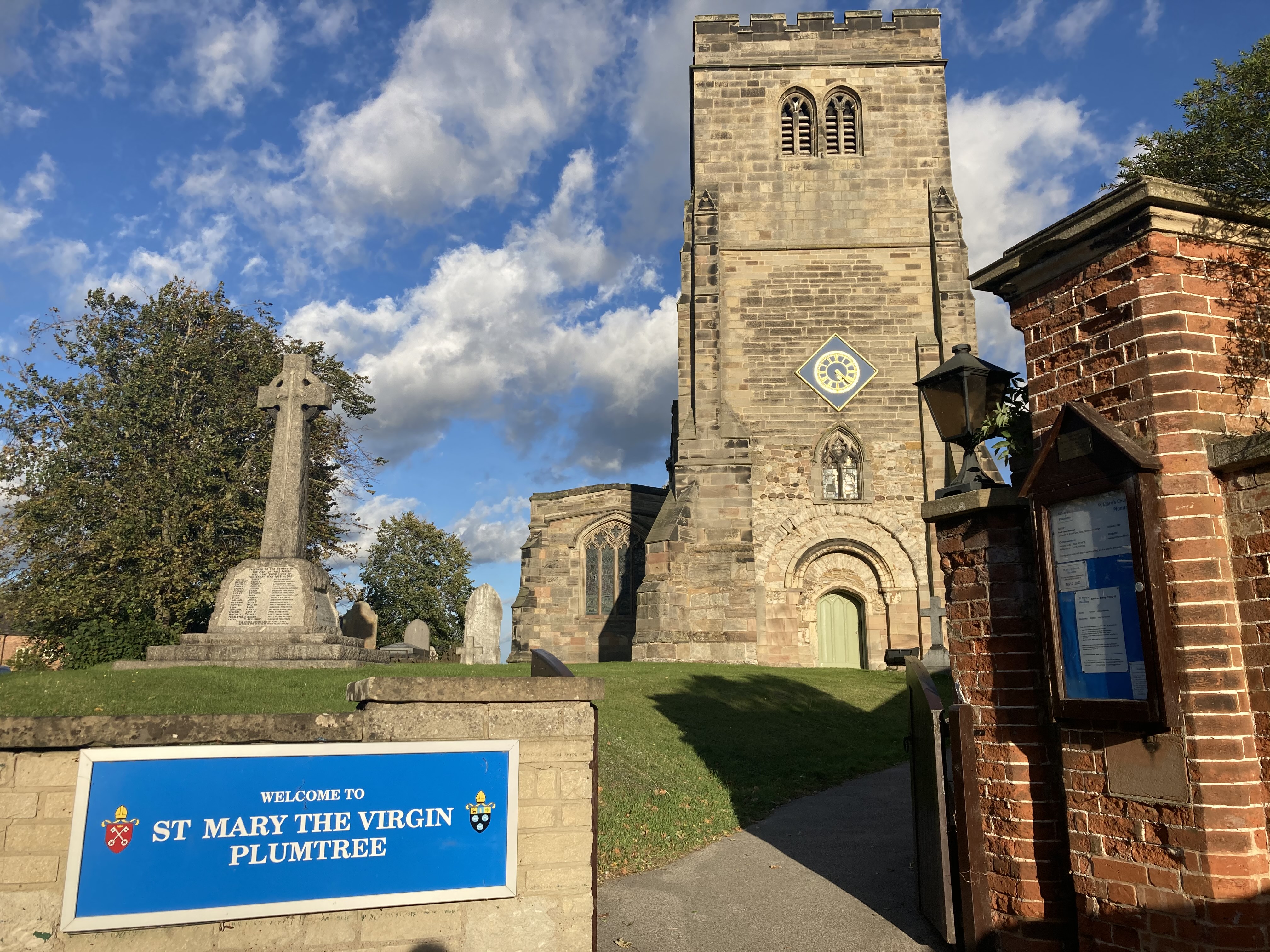
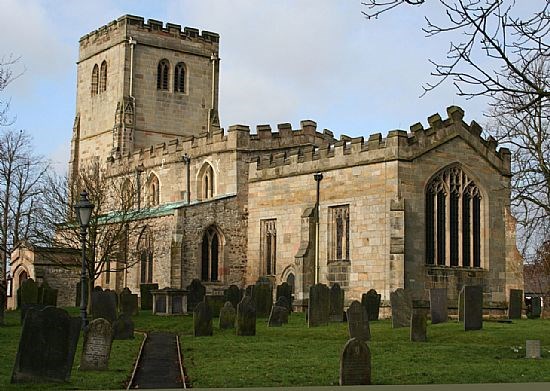
St Mary the Virgin is Grade I listed and contains architecture from several centuries.
The church includes eleventh-century work, thirteenth-century nave fabric and later medieval additions. Its west tower was substantially rebuilt in 1906 after structural problems.
A major Victorian restoration took place in 1873–74 under George Frederick Bodley and Thomas Garner. Stone from Nottingham's old medieval Trent Bridge was reused when the north aisle was reconstructed.
One of the area's historic mother churches
Plumtree was once a more important settlement in the surrounding district, and St Mary's historically served a wider ecclesiastical area. Today the church continues to serve Plumtree alongside neighbouring communities including Normanton on the Wolds and Clipston on the Wolds.
Historic road connections
The main Nottingham-to-Melton route once passed directly through Plumtree. It became a turnpike road in the eighteenth century before the village was bypassed in 1930.
Plumtree's railway heritage
The railway had an important effect on Plumtree's connection with Nottingham and the wider region.
The Midland Railway opened a line between Nottingham and Melton Mowbray in 1880, with Plumtree station built south of the village on the road towards Keyworth.
Passenger services ended in 1949 and goods traffic later ceased, with the station closing fully in 1966.
Perkins and The Carriage Hall
The former railway station survives rather than having been lost to redevelopment. It is now home to Perkins Bar & Bistro, with The Carriage Hall operating as an associated events and wedding venue.
A visible piece of local history
The former station gives Plumtree an unusual heritage feature and provides a direct link with the period when rural railway travel transformed connections between south Nottinghamshire villages and Nottingham.
Homes and property in Plumtree
Plumtree has a small but varied property market, with relatively few homes changing hands in any individual year.
Housing includes period cottages, semi-detached homes, traditional detached houses and substantial individual properties on larger plots.
What should buyers consider?
- Exact road and village position
- Condition and energy efficiency of older homes
- Garden size and driveway parking
- Drainage and surface-water information
- Private drainage or heating systems where applicable
- Planning history for extensions and conversions
- Relationship with nearby farmland
- Broadband and mobile coverage
- Road noise for properties closer to the A606
Woodstead valuation tip
Plumtree is a low-volume market, so an overall village average should never be applied automatically to an individual home.
A two-bedroom semi-detached house on Main Road and a large detached home on Station Road can occupy completely different buyer markets despite being within the same small village.
Schools and education
Plumtree has a private primary school within the village. Rushcliffe's current housing assessment identifies Plumtree as having a public house, private primary school and memorial hall among its local facilities.
Families also have access to a broader range of state primary and secondary schooling in nearby Keyworth, Tollerton and the wider Rushcliffe area.
Getting around from Plumtree
Plumtree combines a rural village setting with relatively straightforward access towards Nottingham.
A606 Melton Road
The village lies immediately west of the A606, providing routes towards Nottingham, Tollerton, Stanton on the Wolds and Melton Mowbray.
Bus travel
Rushcliffe's current planning evidence records a regular bus service between Keyworth and Nottingham running along the main road through Plumtree.
Rail travel
Plumtree no longer has an operating railway station. Buyers requiring rail travel generally use surrounding stations or Nottingham depending on their journey.
Nottingham
The village's location south-east of the city is one of its strongest practical advantages for professionals who want a more rural home environment without moving deep into the countryside.
Local amenities and everyday life
Plumtree is a small village rather than a self-contained service centre, but it retains several notable local amenities.
Burnside Memorial Hall
The hall stands on Church Hill opposite the church and was donated to the parish by Alice Mary Burnside in memory of her husband William Elliott Burnside.
It remains actively used for village events, parish meetings, clubs, classes and school activities.
Countryside and outdoor life
Plumtree remains surrounded predominantly by agricultural land, helping it retain a genuinely rural edge despite its proximity to Nottingham.
Who is Plumtree best suited to?
Plumtree property market
Plumtree is a small, low-volume market, so the overall average is useful context but individual transactions provide a clearer picture of the range of values.
Rightmove's current average across Plumtree over the last year.
Maytrees, Station Road sold in January 2026.
Plumtree Cottage, Mill Lane sold in January 2025.
Rosedene, Main Road sold in June 2025.
Woodstead's view of Plumtree
Plumtree is one of the more discreet premium village locations immediately south of Nottingham.
It does not offer the volume of shops or schools found in Keyworth, nor the suburban scale of nearby West Bridgford. Its appeal is instead based on character, space and location.
St Mary's Church, The Griffin, the former railway station and the largely intact village form give Plumtree a genuine sense of identity rather than the feel of a commuter development.
We would expect strongest demand for beautifully presented detached houses, character homes and properties with good gardens, parking and a quiet position within the village.
For families and professionals, the ability to reach Keyworth, Tollerton, West Bridgford and Nottingham relatively easily broadens the buyer pool considerably.
For sellers, premium presentation matters. Buyers looking at Plumtree are often comparing the village with places such as Normanton on the Wolds, Tollerton, Keyworth and other sought-after south Nottinghamshire locations, so photography should showcase the property as well as its plot and village setting.
Pricing should remain highly property-specific. The £416,500 headline average is useful market context, but the spread of individual recent transactions demonstrates why the exact house, road, plot and condition matter much more.
Plumtree area guide FAQs
Where is Plumtree?
Plumtree is an NG12 village in Rushcliffe, south-east of Nottingham and positioned between Tollerton and Keyworth.
Is Plumtree a Conservation Area?
No. Plumtree is not currently included on Rushcliffe Borough Council's list of designated Conservation Areas, although individual listed buildings and other planning controls can still apply.
Is St Mary's Church in Plumtree listed?
Yes. St Mary the Virgin is Grade I listed and contains fabric from the eleventh century onwards, including Norman, medieval and Victorian work.
What happened to Plumtree railway station?
Passenger services ended in 1949 and the station closed fully in 1966. The former station survives and is now occupied by Perkins Bar & Bistro, with The Carriage Hall alongside it.
Does Plumtree have a pub?
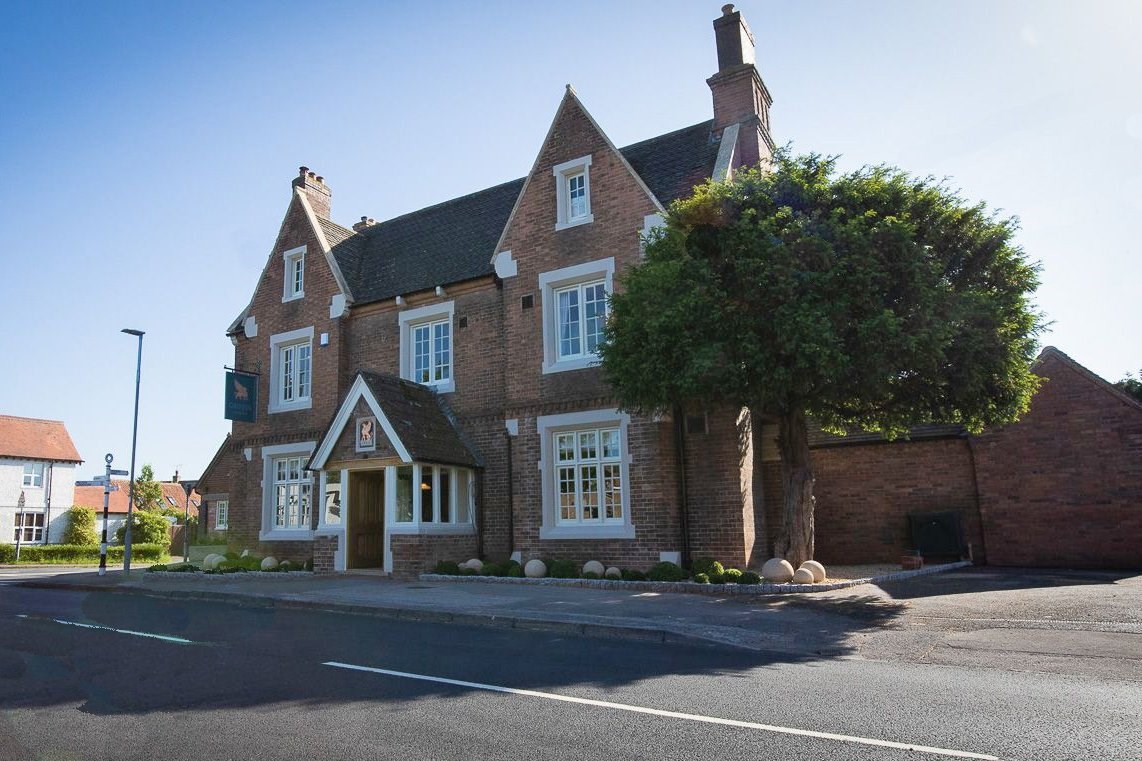
Yes. The Griffin is the village pub and dates from 1843.
What types of property are found in Plumtree?
The village contains period cottages, semi-detached houses, detached family homes and substantial individual properties on larger plots.
How much do homes cost in Plumtree?
Rightmove currently reports an overall sold-price average of £416,500 over the last year. Transaction volumes are relatively low, so individual property values can differ substantially from the headline average.
Is Plumtree suitable for commuters?
Yes. Plumtree is close to the A606 and has road and bus connections towards Nottingham while retaining a rural village setting.
What amenities are in Plumtree?
Local amenities include The Griffin, Burnside Memorial Hall, St Mary's Church, a private primary school and Perkins Bar & Bistro at the former railway station. Keyworth provides a broader range of everyday services nearby.
How should a Plumtree property be valued?
A valuation should consider the exact road, building type, condition, floor area, garden, parking, outlook and comparable recent sales. Plumtree's relatively small transaction pool means a broad NG12 or village average should not be used on its own.
Thinking of moving to or selling in Plumtree?
Woodstead Sales & Lettings helps homeowners, buyers and landlords across Plumtree and the wider NG12 area. With a relatively small and individual housing market, a property-specific valuation and premium marketing strategy are particularly important here.