

Living in Dunham-on-Trent: A Local Area Guide
Dunham-on-Trent is a historic Nottinghamshire village in the Bassetlaw district, set beside the River Trent and the A57. Its riverside location, village school, community facilities and direct road links towards the A1, Retford, Newark and Lincoln make it a practical rural base in the north-east of the county.
The village is particularly known for Dunham Bridge, a long-established crossing of the Trent, and the Grade I listed Church of St Oswald. This guide explores Dunham-on-Trent's history, amenities, schools, transport connections, property types and surrounding countryside.


About Dunham-on-Trent
Dunham-on-Trent is a village and civil parish in the Bassetlaw district of Nottinghamshire. It lies on the western bank of the River Trent, close to the Nottinghamshire and Lincolnshire boundary, with the A57 running through the settlement.
Dunham is larger and better served than several of the very small rural communities around it. The village has its own primary school, village hall, recreation space and community organisations, while Tuxford, Retford and Newark provide a wider range of shops, healthcare and leisure facilities.
Traditional cottages, brick houses, farm buildings and later family homes create a varied village streetscape. The river crossing and historic church give Dunham a distinct identity within the Trent Valley.
History and village character
Dunham-on-Trent has grown around an important crossing point of the River Trent. Before the present bridge, travellers relied on ferry crossings and earlier structures, making the village a natural stopping point on routes between Nottinghamshire and Lincolnshire.
Dunham Bridge
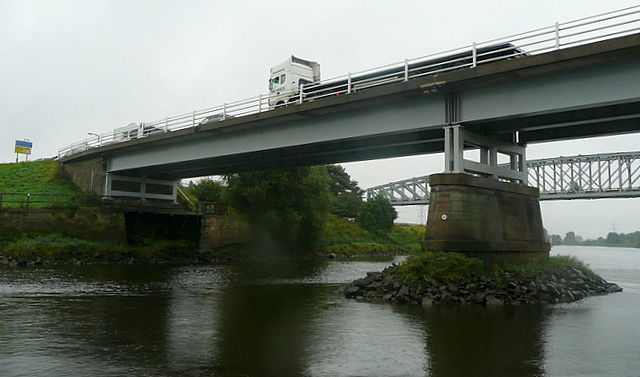
Dunham Bridge carries the A57 across the River Trent. The original iron bridge opened in 1832 as a privately promoted toll crossing. The present bridge was completed in 1976, reusing the earlier river piers, and remains an important east-west connection.
The bridge links Dunham-on-Trent with Newton-on-Trent and the road towards Lincoln. Its presence has shaped the village's development, traffic patterns and relationship with neighbouring Lincolnshire.
St Oswald's Church
The Church of St Oswald is Grade I listed. Its most prominent surviving medieval feature is the 15th-century west tower, noted for its large traceried bell openings. The main body of the church was rebuilt after severe flooding and was substantially reconstructed again in 1862 by Nottingham architect T. C. Hine.
The church became redundant in 2011. Even so, its tower and churchyard remain among Dunham-on-Trent's most important historic landmarks.
Location and surrounding area
Dunham-on-Trent sits close to the eastern edge of Nottinghamshire. The A57 provides direct access west towards the A1 and Retford, and east across Dunham Bridge towards Lincoln.
Tuxford lies to the west, while the smaller communities of Ragnall, Fledborough, Darlton, Laneham and Newton-on-Trent are all nearby. Newark-on-Trent and Retford are the principal larger towns for shopping, employment and rail travel.
Local amenities and village life
Dunham-on-Trent has a stronger range of community facilities than many nearby rural settlements. The village hall, school, recreation space and local groups support an active community, while larger towns remain within practical driving distance.
🏛 Village Hall
Dunham-on-Trent Village Hall includes a main hall, stage, kitchen, meeting room, car park and outdoor grounds used for activities, events and private hire.
⚽ Recreation and community
Community activities and local clubs make use of the village hall and recreation facilities throughout the year.
🛍 Everyday shopping
Tuxford, Retford and Newark provide supermarkets, pharmacies, banks and a broader range of practical services.
🍽 Food and drink
Pubs, cafés, restaurants and takeaways are available across the surrounding villages and nearby market towns.
Schools and childcare
Dunham-on-Trent is home to Dunham-on-Trent Church of England Primary School on Laneham Road. The school serves primary-age pupils and is an important part of village life.
Secondary education options typically include schools in Tuxford, Retford and Newark, depending on the exact address, current admissions criteria and school transport arrangements.
Transport and commuting
Dunham-on-Trent is rural, but its position directly on the A57 gives it stronger road access than many nearby villages. A car remains useful for most households, particularly for shopping and commuting.
Road connections
- A57: direct travel towards Retford, the A1 and Lincoln.
- A1: reached near Markham Moor for north-south journeys.
- Dunham Bridge: carries the A57 across the River Trent.
- Newark and Retford: practical centres for work, retail and services.
Rail travel
There is no railway station in Dunham-on-Trent. Retford station provides regional services and East Coast Main Line connections. Newark Northgate offers additional direct services to London, York and other major destinations.
Bus services
Rural services and timetables can change. Anyone relying on public transport should check the latest routes, stopping points and frequency for their exact address.
Homes and property in Dunham-on-Trent
Dunham-on-Trent offers a varied mix of period cottages, traditional brick houses, former farm properties, bungalows and modern family homes. Detached houses and properties with larger gardens or rural views can also be found around the edges of the village.
Homes within walking distance of the school and village facilities may appeal to families, while quieter lanes and peripheral locations can suit buyers prioritising privacy, parking and outdoor space.
Buyers considering older homes should investigate construction, drainage, flood risk, access rights and any planning or listed-building restrictions. Proximity to the River Trent makes property-specific flood searches and insurance enquiries particularly important.
Countryside and things to do
Dunham-on-Trent is surrounded by flat agricultural countryside, riverside landscapes and public rights of way. Its location gives residents easy access to both Nottinghamshire and Lincolnshire.
🌊 River Trent
The river forms the defining natural feature of the village and offers wide views across the Trent Valley.
🚶 Trent Valley Way
Long-distance walking routes use the river crossing and connect the area with neighbouring villages and riverside paths.
🌾 Rural walks
Footpaths and lanes lead through surrounding farmland towards Ragnall, Laneham, Fledborough and other nearby settlements.
🌳 Wider days out
Clumber Park, Rufford Abbey, Sherwood Forest, Newark and Lincoln are all accessible for longer walks and family days out.
Who is Dunham-on-Trent best suited to?
Dunham-on-Trent can suit buyers who want a genuine rural village with useful community facilities and stronger road connections than many smaller settlements in the surrounding Trent Valley.
“Fantastic Business! Loads of experience of house sales and let's. 5 star customer service tailored to your needs. I felt so supported as a single woman buyer. Everything I needed.”Woodstead customer review
Dunham-on-Trent area guide FAQs
Moving to or from Dunham-on-Trent?
Woodstead helps buyers, sellers and landlords across Dunham-on-Trent and the wider NG22 area. Our team can provide tailored advice for village, period and family homes.
View properties for sale Book a free valuation